VAT on Gold in the UAE – Jewellery, Investment Gold, Reverse Charge and Tourist Refund
Gold is not tax-free in Dubai, but it is taxed lightly and predictably. Since 1 January 2018 the UAE has charged 5% VAT on gold jewellery, calculated on the whole invoice including making charges, while investment-grade gold of 99% purity or more is zero-rated, and gold traded between registered businesses moves under a reverse-charge mechanism so that no cash VAT changes hands. Tourists can reclaim most of the VAT they pay on jewellery through the Planet refund scheme at departure.
This page sets out each rule with a formula and a worked example, explains the tourist refund step by step, and clears up the misconceptions that cost shoppers money. The Federal Tax Authority (FTA) is the authority on all of it; where rules have changed over time we describe them generally and suggest checking the current text.
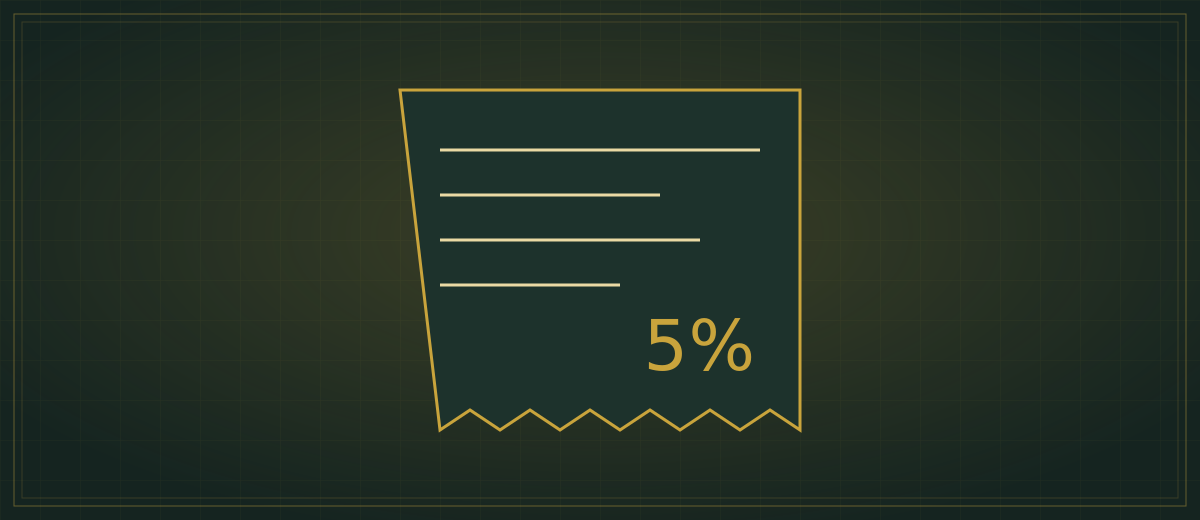
VAT on gold in the UAE: the basic rules
The UAE introduced VAT at a single standard rate of 5% on 1 January 2018, administered by the Federal Tax Authority. Gold was not exempted; instead the law created three treatments depending on what is sold and to whom:
- Gold jewellery sold to consumers: standard-rated at 5% on the full price, including the metal, the making charge and any stones.
- Investment gold: zero-rated when it is of a purity of 99% or more and in a form tradable in bullion markets, such as bars and most bullion coins.
- Gold and gold jewellery traded between VAT-registered businesses: subject to a reverse-charge mechanism, so the buyer accounts for the VAT rather than paying it to the seller.
Because the metal price is set globally and the Dubai gold rate is simply that price in dirhams, VAT is the main tax layer a shopper in the UAE meets; there is no import duty on gold and no separate luxury tax. That combination is the reason the total price in Dubai is lower than in countries that add customs duty and higher sales tax. Rates and thresholds quoted here reflect the rules as generally understood; the FTA's published guidance is the authority if anything changes.
VAT on gold jewellery: taxed on the full invoice
For a necklace, bangle, ring or set, VAT is 5% of the taxable amount, and the taxable amount is everything the shop charges: metal value plus making charges plus stones. It is not charged on the metal alone, and the making charge is not a separate zero-rated service. The formula is:
VAT = 5% × (metal value + making charges + stone charges), and total payable = subtotal × 1.05.
Worked example: a 22K necklace with a metal value of AED 10,000 and a making charge of AED 800 has a subtotal of AED 10,800. VAT is 5% of that, AED 540, and the total is AED 11,340. If the same necklace carried AED 1,500 of making charges, VAT would be AED 575 and the total AED 12,075, which shows why negotiating the making charge also reduces the tax.
Shops must show VAT as a separate line on a tax invoice with their tax registration number (TRN). A quote given as "all inclusive" should still be broken down on request. Pieces of 18K, 21K, 22K and even 24K jewellery (for example a 24K chain or a decorative coin pendant) are all standard-rated: the test is whether the item is jewellery, not its karat. Our making charges guide explains how the labour line is built, and the 22K rate page shows today's metal rate that the first line of the invoice is based on.
Investment gold is zero-rated: bars, coins and the 99% test
The UAE zero-rates the supply of investment precious metals: gold, silver and platinum of a purity of 99% or more that is in a form tradable in global bullion markets. In practice that covers refinery bars from 1 g to 1 kg, kilobars, and bullion coins such as the common one-ounce sovereign-mint coins, when they are sold on their metal value. Zero-rated means VAT is charged at 0%, so the buyer pays nothing on top of the dealer's price and the dealer can still recover its own input VAT.
The purity threshold is the practical dividing line. A 24K bar stamped 999 or 999.9 qualifies; a 22K coin (916) does not, and neither does a 24K item that is clearly a piece of jewellery or a decorative object rather than a tradable bullion product. Gift-boxed coins with heavy packaging and design premiums are usually still zero-rated if they are bullion coins, but collector pieces priced far above metal value may be treated as standard-rated goods; ask the dealer how an item is invoiced.
For residents saving in gold, this rule makes bars and coins the cheapest route per gram: no VAT, no making charge, only a small premium over spot. The gold bars price in Dubai page lists common sizes and the 24K gold rate shows the metal value they are priced from. Keep the dealer's invoice and the assay card; when you sell, the buyer will not charge VAT either, but will want proof of the bar's origin.
The reverse charge for gold and diamond traders (B2B)
Dubai is a wholesale hub where gold passes between refiners, bullion dealers, manufacturers and retailers many times before it reaches a consumer. If 5% VAT were paid in cash at every step, traders would carry large sums of recoverable tax and the UAE would be less competitive than other bullion centres. To avoid that, a Cabinet Decision in 2018 introduced a reverse-charge mechanism for supplies of gold, diamonds and products where the principal component is gold or diamonds, when both parties are VAT-registered and the buyer intends to resell or use the goods in manufacturing.
Under the reverse charge the seller does not charge VAT on the invoice. Instead the buyer declares both the output VAT and the matching input VAT in its own return, so the net cash effect is usually zero. The seller must obtain a written declaration from the buyer confirming registration and intention, and keep it with the invoice. Later decisions widened the mechanism to cover a broader range of precious metals, precious stones and jewellery made from them; because the scope has been expanded over time, traders should rely on the current Cabinet Decision and FTA guidance rather than a summary.
What this means for an ordinary shopper: nothing changes at the counter. The reverse charge applies only between registered businesses. If you are a small jeweller or a trader buying from the Dubai gold wholesalers, make sure your supplier has your TRN and declaration on file, or VAT will be charged in the normal way.
Tourist VAT refund on gold: how the Planet scheme works
Visitors to the UAE can reclaim VAT on jewellery through the national tax-refund scheme operated by Planet on behalf of the FTA. The conditions and steps:
- Eligibility: you are a tourist (not a UAE resident) aged 18 or over, buying from a retailer registered in the scheme; most gold shops in the souks, the Gold & Diamond Park and the malls are.
- Minimum spend: AED 250 on a single tax invoice.
- At the shop: show your passport (or GCC ID where accepted) so the retailer issues a digital tax-free tag linked to your invoice.
- Timing: the goods must leave the UAE within 90 days of purchase, unused.
- At departure: validate the purchase at a Planet counter or kiosk at the airport, port or land border before you leave; have the jewellery and invoice available for inspection, and do this before checking in bags that contain the gold.
- Payout: choose a refund to card or cash. Planet deducts an administration fee, so you receive most of the VAT rather than all of it.
Investment bars carry no VAT, so there is nothing to reclaim on them. A UAE resident cannot use the scheme even when travelling. If you later return to India or another country, remember that your home customs duty is a separate matter; see carrying gold from Dubai to India for the allowances.
Worked examples: VAT on different gold purchases
The table below applies the rules to typical purchases. Amounts are illustrative round numbers, not today's prices; use the live rate and the calculator to build your own figures.
| Purchase | Treatment | Calculation | VAT |
|---|---|---|---|
| 22K bangle, metal AED 4,000, making AED 400 | Standard-rated | 5% × 4,400 | AED 220 |
| 18K diamond ring, gold AED 1,200, stones AED 3,000, making AED 600 | Standard-rated | 5% × 4,800 | AED 240 |
| 100 g 24K refinery bar (999.9), AED 30,000 | Zero-rated | 0% × 30,000 | AED 0 |
| 1 oz 22K bullion coin (916) | Standard-rated (below 99%) | 5% × price | 5% of price |
| Tourist buys the 22K bangle above | Standard-rated, refundable | AED 220 paid, most refunded at the airport after fee | Small net cost |
| Registered retailer buys 1 kg from a registered wholesaler | Reverse charge | Buyer self-accounts; no VAT on invoice | Nil cash |
Two points stand out. For jewellery, the only ways to reduce VAT are to reduce the making charge or to be a tourist who claims it back. For saving, a zero-rated bar beats a 24K chain by the whole 5% plus the making charge. The gold calculator gives the metal value for any weight so you can fill in the first column yourself.
Is gold tax-free in Dubai? Common misconceptions
"Gold is tax-free in Dubai." Only partly. There is no import duty and no income or capital-gains tax for individuals, and investment bars are zero-rated, which is why the phrase survives. But jewellery carries 5% VAT on the full invoice.
"VAT is only on the making charge." No. The taxable amount is the whole invoice: metal, labour and stones.
"24K jewellery is zero-rated because it is 999." No. Purity is necessary but not sufficient; the item must be investment gold in a tradable bullion form. A 24K chain is jewellery and is taxed.
"Residents can get the tourist refund if they are flying out." No. The scheme is for non-residents only.
"Shops in the souk do not charge VAT if I pay cash." A registered shop must charge and remit VAT regardless of payment method. A shop offering to skip it is offering an invoice you cannot rely on for resale, insurance or customs.
"Selling my old gold triggers VAT." A private individual selling personal jewellery to a shop is not making a taxable supply; the shop may apply its own VAT rules when it resells. Read the selling guide for how buy-back prices are set.
"Gold Souk prices include VAT." Usually the rate board shows the metal rate excluding VAT and the final invoice adds 5%; always ask whether a quote is before or after tax.
Residents, businesses and record-keeping
For residents, VAT on gold is a cost of buying jewellery, not an ongoing tax: there is no annual declaration, no tax on holding gold and no tax on a later private sale. The practical advice is to keep every tax invoice. It proves the weight, karat and price for insurance, supports a buy-back or exchange at the day's rate, and shows customs officers abroad what you paid and when. If you buy bars for savings, the invoice and assay card are what the next buyer will ask for.
For businesses, gold is a sector the FTA watches closely because of its value and the reverse-charge rules. Jewellers must register once their taxable turnover crosses the mandatory threshold, issue compliant tax invoices, distinguish standard-rated, zero-rated and reverse-charge supplies in their returns, and hold the buyer declarations that support reverse-charge treatment. Retailers in the tourist refund scheme also need the Planet system at the till. Penalties for errors are administrative but can be substantial, so most traders use an accountant familiar with the gold sector.
Everything on this page is general information, not tax advice. The authoritative sources are the Federal Decree-Law on VAT, its Executive Regulation and the Cabinet Decisions on gold and diamonds, all published by the FTA, and a registered tax agent for anything specific. For the shopping side, the buying guide puts VAT in the context of the whole invoice.
Frequently asked questions
What is the VAT rate on gold in the UAE?
5% on gold jewellery, charged on the full invoice including making charges and stones, since 1 January 2018. Investment gold of 99% purity or more in bullion form, such as bars and most bullion coins, is zero-rated. Trade between VAT-registered gold businesses uses a reverse charge so no VAT is paid on the invoice.
Is gold tax-free in Dubai?
Not entirely. There is no import duty, no personal income or capital-gains tax, and investment bars carry 0% VAT, but jewellery is taxed at 5%. Tourists can reclaim most of that 5% through the Planet refund scheme when they leave the country.
How do tourists claim the VAT refund on gold bought in Dubai?
Spend at least AED 250 on one invoice at a shop registered in the scheme, show your passport so a tax-free tag is issued, keep the jewellery unused, and validate the purchase at a Planet counter or kiosk at the airport before departure within 90 days. The refund, minus a fee, is paid to your card or in cash.
Do I pay VAT on gold bars and coins in the UAE?
No, provided the gold is at least 99% pure and in a form traded on bullion markets, such as refinery bars and standard bullion coins. Coins or bars below 99% purity, and any item that is really jewellery, are taxed at 5%.
What is the VAT reverse charge on gold in the UAE?
A mechanism for sales of gold, diamonds and goods mainly made of them between VAT-registered businesses. The seller does not charge VAT; the buyer declares the output and input VAT in its own return, usually with no net cash payment. The buyer must give the seller a written declaration, and the scope has been widened by later Cabinet Decisions.
Keep reading
-
 Is Gold Cheaper in Dubai? Price Comparison vs India, UK, Pakistan and Saudi
Is gold cheaper in Dubai? Why the bill is lower (no import duty, 5% refundable VAT, low making charges), a worked comparison vs India, UK and Saudi.
-
 How to Buy Gold in Dubai – The Complete Buying Guide for Residents and Tourists
How to buy gold in Dubai step by step: choosing a karat, reading the rate board, the invoice, hallmarks, bargaining on making charges and VAT refund.
-
 Gold Bar Price in Dubai Today – 1 g to 1 kg Bars and Biscuits
Live gold bar price in Dubai for 1 g, 10 g, 100 g, tola and 1 kg bars: premiums over spot, zero VAT on 24K bars, PAMP and Emirates Gold, where to buy.
-
 Gold Making Charges in Dubai – How They Are Calculated and How to Negotiate
Gold making charges in Dubai explained: per-gram vs percentage, typical ranges, what zero making charges really mean, how to negotiate and worked examples.
-
 Carrying Gold from Dubai to India – Customs Limit, Duty-Free Allowance and Duty
How much gold you can carry from Dubai to India: duty-free allowance for men and women, jewellery vs bars, red channel declaration, duty and exit rules.
-
 Gold Wholesalers in Dubai – Wholesale Gold Rate, Factories and How to Source Stock
How gold wholesalers in Dubai work: Gold Centre and Gold Land in Deira, DMCC bullion trade, factories, wholesale vs retail rate, minimums and licences.
-
 Gold Loan in the UAE: How a Loan Against Gold Works in Dubai, Costs, Risks and Alternatives
How a gold loan works in the UAE and Dubai: loan-to-value tied to the daily rate, who offers it, costs, risks, selling vs pledging, Islamic alternatives.
-
 How to Sell Gold in Dubai – Where to Sell, Today's Selling Rate and What to Expect
Sell gold in Dubai with confidence: where to sell near you, today's selling rate vs buying rate, how purity is tested, fair deductions and scams to avoid.