24K Gold Rate Today in Dubai & UAE – 24 Carat Gold Price per Gram, Bars and Coins
The 24K gold rate today in Dubai and across the UAE is the pure-metal benchmark that every other karat is derived from, and you can see it live above per gram, per 10 grams, per tola and per troy ounce in dirhams and dollars. 24 carat is the purity of investment bars and bullion coins, of the 999 bangles favoured by Chinese and other Far-East buyers, and of almost nothing else in a jewellery shop. This page explains what 999 and 999.9 mean, why bars carry a premium over the rate, how VAT zero-rating works for investment gold, how to store what you buy and how 24K compares with the jewellery karats.
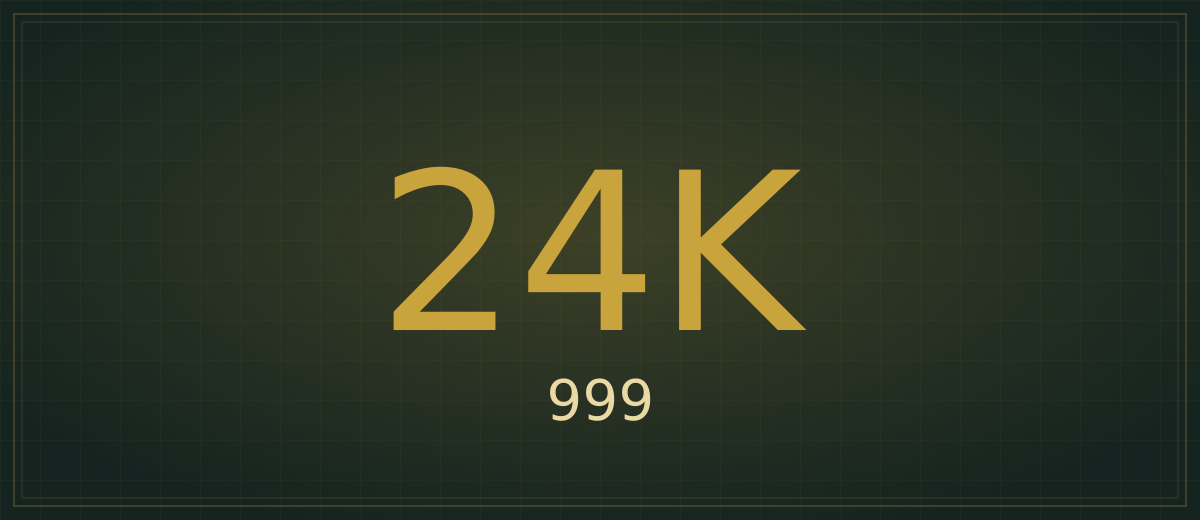
What 24 carat (999) gold means
24K is gold with no deliberate alloy. In practice refiners express it as a fineness: 999 means 99.9% pure, and 999.9, often written as "four nines", means 99.99% pure. Investment bars from the major refiners are 999.9; coins such as the Canadian Maple Leaf are 999.9, while some older or sovereign-style coins are lower and priced accordingly. In the UAE the VAT rules treat anything of 99% purity or higher that is tradable as investment gold, so both 999 and 999.9 qualify.
Pure gold is soft enough to mark with a fingernail and bends easily, which is why it is sold as bars, coins and heavy, simply shaped bangles rather than as rings or fine chains. It is also the deepest, most saturated yellow of any karat; once you have seen a 999 bangle next to a 22K one, the difference is obvious.
Because 24K is the reference purity, the rate line on every shop board starts with it. The 22K rate is this figure multiplied by 0.916, 21K by 0.875 and 18K by 0.75. Our karats guide explains why each exists; here we concentrate on how 24K is actually bought and sold.
How the 24K rate in Dubai is derived from the spot price
The international gold market quotes a price in US dollars per troy ounce. Divide by 31.1035 for a gram, multiply by the dirham peg of 3.6725, and you have the 24K gram rate in AED. Because the peg has not moved since 1997, the dirham price tracks the dollar price exactly; there is no currency risk hidden inside a Dubai gold quote, which is part of what makes the city attractive for bullion buyers from countries with volatile currencies.
The retail figure displayed in shops, and on the board of our gold rate today page, is published by the Dubai Gold & Jewellery Group and refreshed during the trading day. It usually sits within a dirham of the pure spot conversion. The widget at the top of this page performs the conversion continuously, and the spot price in USD page shows the underlying ounce price. For a bar quote, however, the rate is only the starting point: the next section explains the premium.
Shops quote 24K in several units at once. A gram is the UAE standard, a tola (11.6638 g) is used for South Asian customers, and a troy ounce (31.1035 g) is how international coins and some bars are sized. The widget above converts between them so you can compare a 1-ounce coin with a 10-tola bar on equal terms.
VAT on 24K gold: why investment gold is zero-rated
The UAE introduced 5% VAT on 1 January 2018, and gold jewellery has been taxed on the full invoice since then. Investment-grade gold, defined as gold of 99% purity or more that is tradable in the bullion market, is zero-rated. In plain terms, a 999 or 999.9 bar or coin bought from a registered dealer carries no VAT, while a 22K bangle carries 5% on both the metal and the making charge. This single rule is the main reason residents saving in gold buy bars rather than jewellery.
Two practical points follow. First, the zero-rating is about purity and tradability, not shape; a 999 bangle sold as jewellery with a making charge is treated as jewellery, so ask how the invoice is structured. Second, trade between VAT-registered gold businesses uses a reverse-charge mechanism, which does not affect retail buyers but explains why wholesale quotes look different. The VAT on gold in the UAE guide goes through the tourist refund process and the rules in detail.
24K bangles and jewellery for Chinese and Far-East buyers
Walk through the Deira souk and you will notice a small number of shops with bright, plain, heavy bangles and chains stamped 999 rather than 916. These serve a different tradition. In China, Hong Kong, Taiwan and Vietnam, gold jewellery is traditionally bought as a store of value first and an ornament second, so pure gold in simple, easily weighed forms is preferred. Wedding gifts of 999 bangles, baby bracelets and zodiac pendants follow the same logic: the piece should be worth its weight in gold with as little craftsmanship cost as possible.
These pieces are priced like bullion, at the 24K rate plus a modest labour charge, and they resell at close to the rate because there is no purity discount. The trade-off is durability. Pure gold bangles dent and scratch, so they are worn for occasions rather than every day, and a thin 999 chain will stretch. If you like the colour but need something wearable, 22K is the nearest practical alternative. The bangles and bracelets page compares weights and styles across karats.
Why rings and chains are rarely 24K
A ring is the hardest-working piece of jewellery you own. It is knocked against desks, doors and steering wheels thousands of times a year, and a stone set in pure gold would loosen within months. That is why rings, fine chains, earrings and anything diamond-set are made in 18K, 21K or 22K, where copper and silver give the metal enough spring to hold a shape. 24K jewellery exists, but it is confined to designs that are thick, plain and self-supporting.
This has a consequence for buyers comparing prices. A 24K piece is more expensive per gram than any jewellery karat, yet it carries less labour, so the gap on the invoice is smaller than the rate difference suggests. Conversely, when you sell, 24K recovers more of its purchase price because less of that price was labour. The gold calculator lets you compare the metal value of the same weight across karats before you decide.
Storing and insuring 24K gold in the UAE
Once you own bars or coins, the question becomes where to keep them. Common options for UAE residents include a bank safe-deposit box, where availability varies by bank and branch and an annual fee applies; a home safe bolted to the structure, with the gold declared on a home-contents insurance policy; and allocated storage offered by some bullion dealers and vault operators in Dubai's free zones, which charge a percentage of value per year but allow you to sell without physically moving the metal. Each has a cost, and the cheapest option is not always the one that lets you sleep.
Keep the assay card and invoice with the bar or in a separate secure place; a sealed bar with matching paperwork sells back at the best price. If you move abroad, note that many countries treat gold as a declarable item above a value threshold, and that India in particular limits what residents can bring in without duty. See carrying gold from Dubai to India before you travel.
Selling 24K gold and the rate you will be offered
Selling 24K is simpler than selling jewellery because there is no making charge to lose and the purity is not in doubt if the bar is sealed. A dealer or souk shop will quote the day's 24K selling rate, which sits slightly below the buying rate, and may deduct a small amount if the packaging is broken and the bar needs testing. Coins with scratches or missing capsules may lose part of their collector premium but keep their metal value.
Shop around: the spread between what dealers pay for a kilo bar and a 10-gram bar can differ, and the buyer who sold you the bar is often, but not always, the one who buys it back at the tightest margin. The selling guide lists the areas where buyers cluster, from Deira to the Gold & Diamond Park on Sheikh Zayed Road. Prices on this page are indicative; nothing here is financial advice, and gold can fall as well as rise.
Frequently asked questions
What is the 24K gold rate in Dubai today?
The live widget at the top of this page shows today's 24 carat gold rate per gram, 10 grams, tola and ounce in AED and USD, converted from the international spot price at the fixed dirham peg. The same rate applies throughout the UAE; dealers add a premium for bars and coins on top of it.
Is 24K gold the same as 999 gold?
Yes. 24K describes gold with no added alloy, and 999 or 999.9 is the fineness stamp that states the actual purity: 99.9% or 99.99%. Investment bars and most bullion coins are 999.9; anything of 99% purity or higher counts as investment gold for UAE VAT purposes.
Do I pay VAT on 24K gold bars in the UAE?
No, provided the bar or coin is of 99% purity or more and sold as tradable investment gold by a registered dealer; such gold is zero-rated. Jewellery, including 999 pieces sold with a making charge as ornaments, is taxed at 5% on the full invoice.
Why is a 1-gram gold bar more expensive per gram than a 100-gram bar?
Because the cost of refining, minting, packaging and certifying a bar is roughly the same regardless of size, so on a small bar it is spread over very little gold. The premium above the rate shrinks as bar size grows, which is why many investors prefer 50-gram, 100-gram or kilo bars when they can afford them.
Can I buy 24K gold jewellery in Dubai?
Yes, mainly as plain heavy bangles, chains and pendants stamped 999, sold largely to Chinese and other Far-East customers who value purity over design. These pieces are priced close to the bar rate but are soft, so they dent and scratch with daily wear. Rings and fine chains are made in 18K to 22K instead.
Is the 24K gold rate the same in Abu Dhabi and Sharjah?
Yes. The daily 24K rate is national and comes from the same spot conversion everywhere in the UAE. What differs between Dubai, Abu Dhabi, Sharjah and the other emirates is the dealer premium on bars and coins and the choice of sizes available, not the price of the metal itself.
Keep reading
-
 Gold Bar Price in Dubai Today – 1 g to 1 kg Bars and Biscuits
Live gold bar price in Dubai for 1 g, 10 g, 100 g, tola and 1 kg bars: premiums over spot, zero VAT on 24K bars, PAMP and Emirates Gold, where to buy.
-
 Gold Coins in Dubai – Prices, Sizes from 1 g to 1 oz and How to Buy
Gold coin price in Dubai explained: 1 g, 2 g, 4 g, 8 g, 10 g and 1 oz coins, 22K vs 24K, premiums over bars, zero VAT on 99%+ purity, gifting and resale.
-
 VAT on Gold in the UAE – Jewellery, Investment Gold, Reverse Charge and Tourist Refund
VAT on gold in the UAE explained: 5% on jewellery since 2018, zero-rated investment gold, reverse charge for traders, tourist refund via Planet, examples.
-
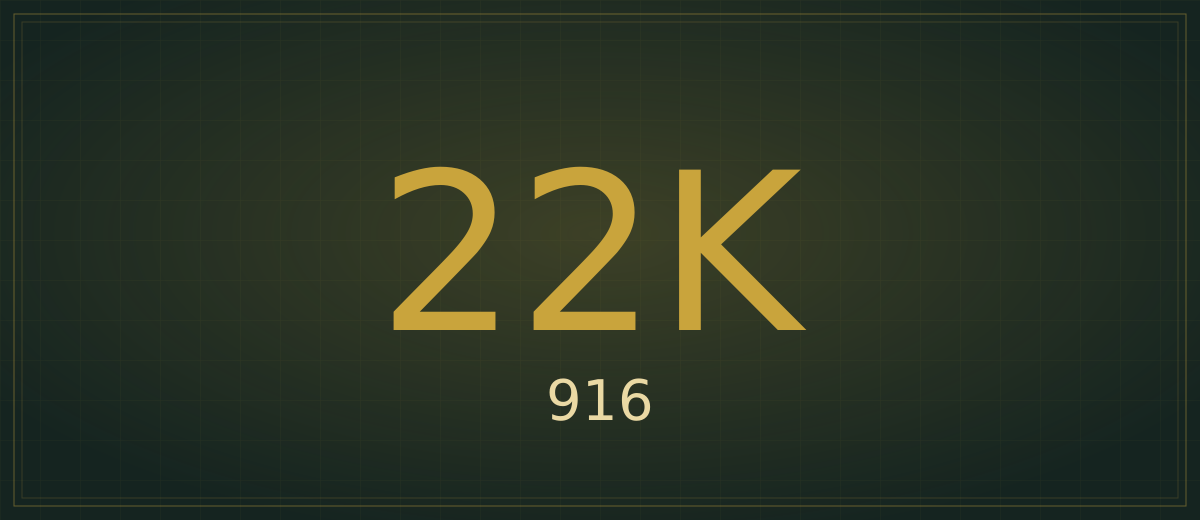 22K Gold Rate Today in UAE – 22 Carat Gold Price in Dubai per Gram, 10 g and Tola
Live 22K gold rate today in UAE and Dubai per gram, 10 g and tola in AED and USD: what 916 means, making charges, buying vs selling rate, hallmark checks.
-
 Gold Spot Price in USD per Ounce – World Gold Price Live from Dubai
Live gold spot price in US dollars per troy ounce, explained from Dubai: what spot means, LBMA fix vs COMEX futures, trading hours and the AED gram rate.
-
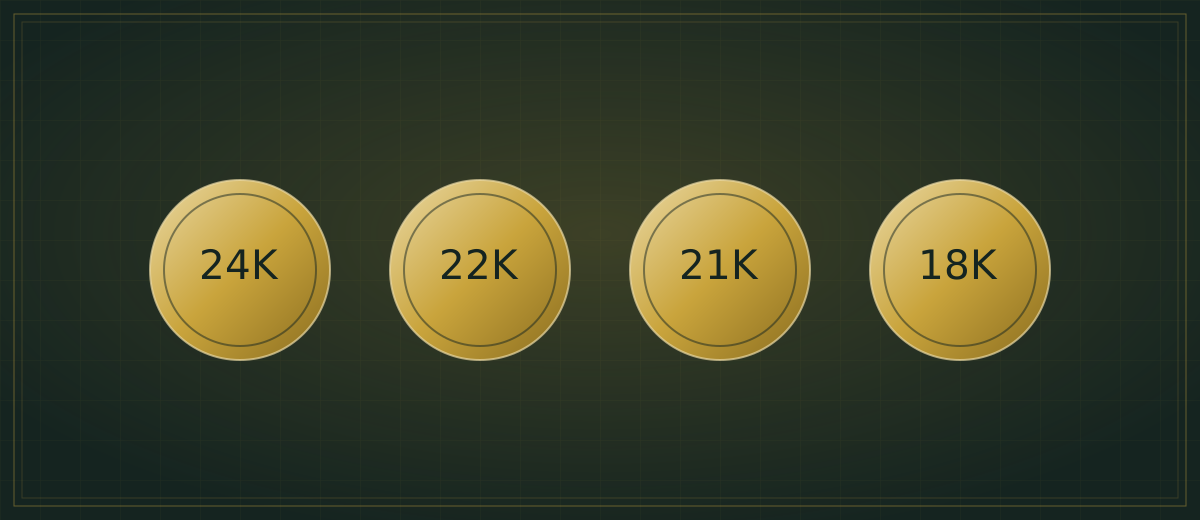 Gold Karats Explained: 24K vs 22K vs 21K vs 18K (999, 916, 875, 750) in the UAE
What 24K, 22K, 21K and 18K gold mean, what the 999, 916, 875 and 750 stamps tell you, which karat suits which jewellery, and how each is priced in the UAE.
-
 Gold Rate in Abu Dhabi Today – 24K, 22K and 21K per Gram
Today's gold rate in Abu Dhabi, live for 24K, 22K, 21K and 18K per gram in AED, plus where to buy at Madinat Zayed Gold Centre, Hamdan Street and malls.
-
 Gold Rate in Al Ain Today – Live Price per Gram and Where to Buy
Today's gold rate in Al Ain per gram for 24K, 22K and 21K, plus a local guide to the Al Ain gold souk, Al Ain Mall and Bawadi Mall jewellers and Buraimi.